
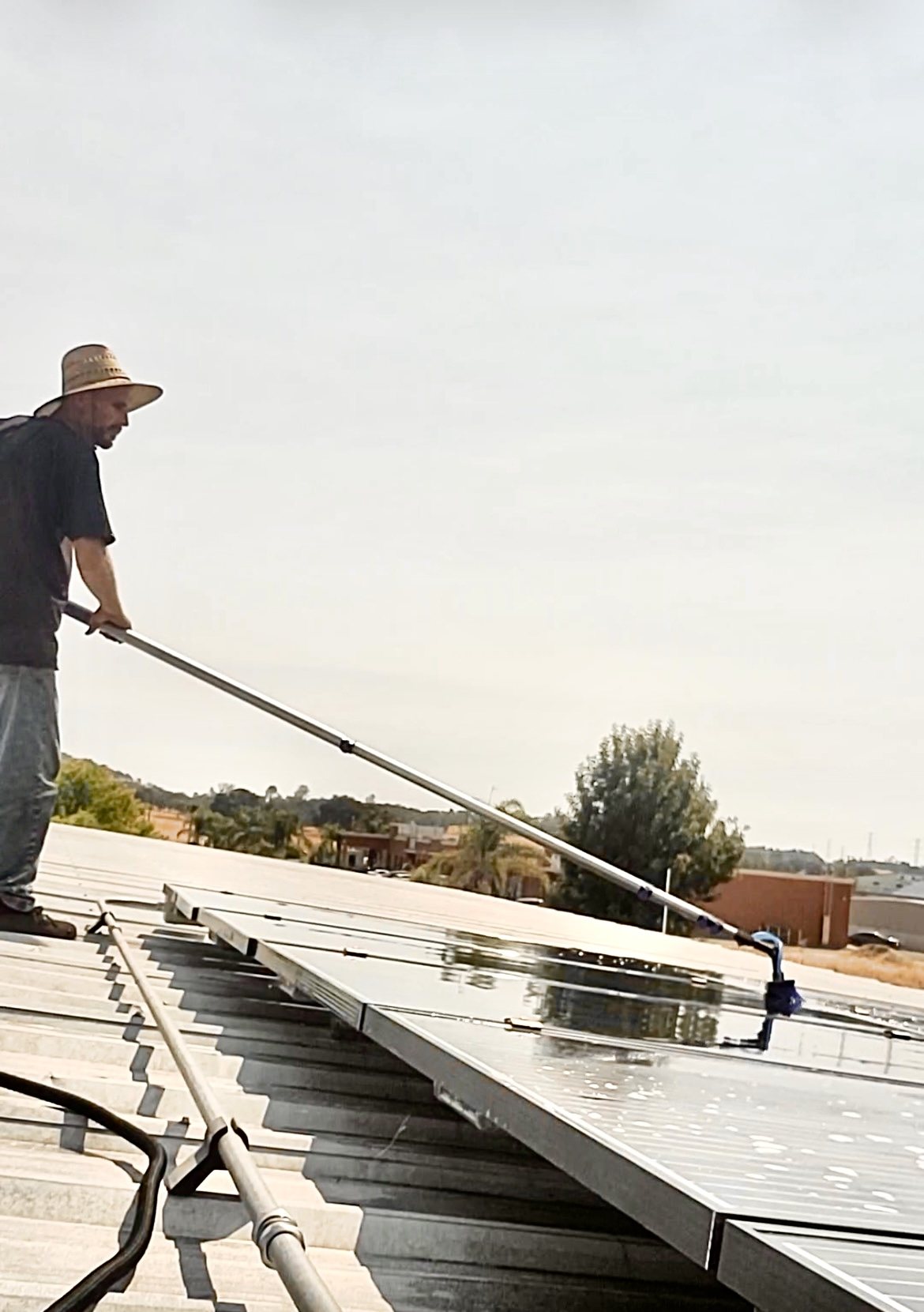
Solar panels are built to live outdoors, but Central California gives them plenty to collect: dry Valley dust, spring pollen, bird droppings, leaves, and residue from changing weather. A light coating may not always be obvious from the ground, yet it can make the panel surface look hazy or uneven over time.
For homeowners from Stockton and Lodi to Valley Springs, Ione, Jackson, and Angels Camp, the best cleaning interval is not a single calendar rule. It depends on where the property sits, how exposed the array is, nearby trees and birds, and what the panels look like between seasons. A simple visual routine and professional cleaning when buildup is apparent can help keep the system looking cared for without guessing.
Start with a practical baseline
For many homes, an inspection once or twice a year is a sensible starting point. Look at the panels from a safe vantage point, such as the ground, driveway, or yard. If they appear generally clear after normal rain and do not show concentrated debris, immediate cleaning may not be necessary.
Properties near open fields, construction activity, unpaved roads, agricultural areas, or foothill terrain may need closer attention. Fine dust can settle repeatedly during the dry season, while homes beneath branches may collect leaves, seed pods, or sticky pollen. In communities such as Galt, Elk Grove, Lathrop, Manteca, Ripon, Modesto, Ceres, Oakdale, San Andreas, and Copperopolis, the conditions around an individual home matter more than its city name.
Rather than scheduling automatically, check the panel surfaces after periods of wind, prolonged dry weather, heavy pollen, or a noticeable bird presence. This approach lets you respond to the actual conditions on your property.
Why the seasons matter here
Central Valley summers often bring long dry stretches, windblown soil, and dust that can settle in a thin film. Rain may rinse away some loose material, but it does not necessarily remove everything—especially grime that has dried on or material caught along the lower edge of a panel.
Spring can bring pollen and plant debris. Autumn may add leaves and small twigs, particularly near mature landscaping. After storms, look for mud splash, residue, or fresh debris. Bird droppings deserve timely attention because they are concentrated and can bake onto a warm surface. A panel does not have to look completely covered for these localized spots to warrant a closer look.
Inspection cues that suggest it is time to call
Use this quick checklist from the ground. Do not climb onto a roof or walk on panels to inspect them.
- The glass looks dull, dusty, streaked, or noticeably different from nearby cleaner panels.
- You can see bird droppings, leaf litter, seeds, or small branches on the array.
- Pollen, dust, or debris has remained after a dry spell, wind event, or seasonal change.
- Trees, rooflines, or local birds repeatedly deposit material in the same areas.
- You are already arranging exterior maintenance and want the panels professionally cleaned at the same time.
- You want a professional set of eyes on accessible surface buildup rather than relying on a distant view.
If your monitoring system shows an unexpected change, use the manufacturer’s guidance and consider other possible causes as well. Soiling is only one factor that can affect a system, so it is best not to assume that cleaning alone will resolve a performance concern.
Why gentle cleaning matters
Solar-panel glass, frames, seals, wiring, and mounting hardware should be treated carefully. Pure Pressure Pro Cleaning LLC uses soft brushes and low pressure for solar work, focusing on lifting surface buildup without aggressive pressure. This is different from treating a driveway or other hard exterior surface.
Avoid harsh DIY scrubbing, abrasive pads, and high-pressure methods near panels. These can create avoidable risk for the panel surface, seals, or surrounding roof components. It is also wise to follow the panel manufacturer’s care instructions and avoid doing roof work in conditions that feel unsafe.
A professional visit is especially useful when panels are high, difficult to access, or spread across several roof sections. The aim is a careful, surface-appropriate cleaning process—not a promise of a particular energy-production result. If you would like job photos, simply request them when you schedule; photos are provided upon request.
What to prepare before the crew arrives
A little preparation helps the appointment go smoothly. Please make sure there is a clear route to the work area, secure pets, and let the crew know about gates, vehicles, delicate landscaping, or access considerations. Move items away from the immediate path if practical.
The crew brings a buffer tank, which is fed by the customer’s accessible, working spigot. Please ensure that the spigot can be reached and used during the appointment. If access is limited, tell us before the visit so the job can be planned appropriately. You can also point out sections with recurring bird activity or debris so the crew understands what you have been seeing.
When to request a quote
Request a quote when you see visible buildup, after a particularly dusty or pollen-heavy period, before listing a home, or when routine inspection suggests the panels need attention. A quote is also helpful if you are unsure whether the surfaces are due for cleaning; a straightforward conversation can help you decide without pressure.
Pure Pressure Pro Cleaning LLC is based in Valley Springs, is licensed and insured, and serves Central Valley and foothill communities seven days a week from 7:00 AM to 7:00 PM. Free quotes are no-obligation, so you can ask about your home’s access and panel conditions before scheduling.
For careful solar panel cleaning and a free, no-obligation quote, Request a free quote or call (209) 954-2062.